
Resil B. Mojares, 83, National Artist for Literature. Historian, critic of Philippine literature; book author, professor, and former newspaper columnist.
Passage
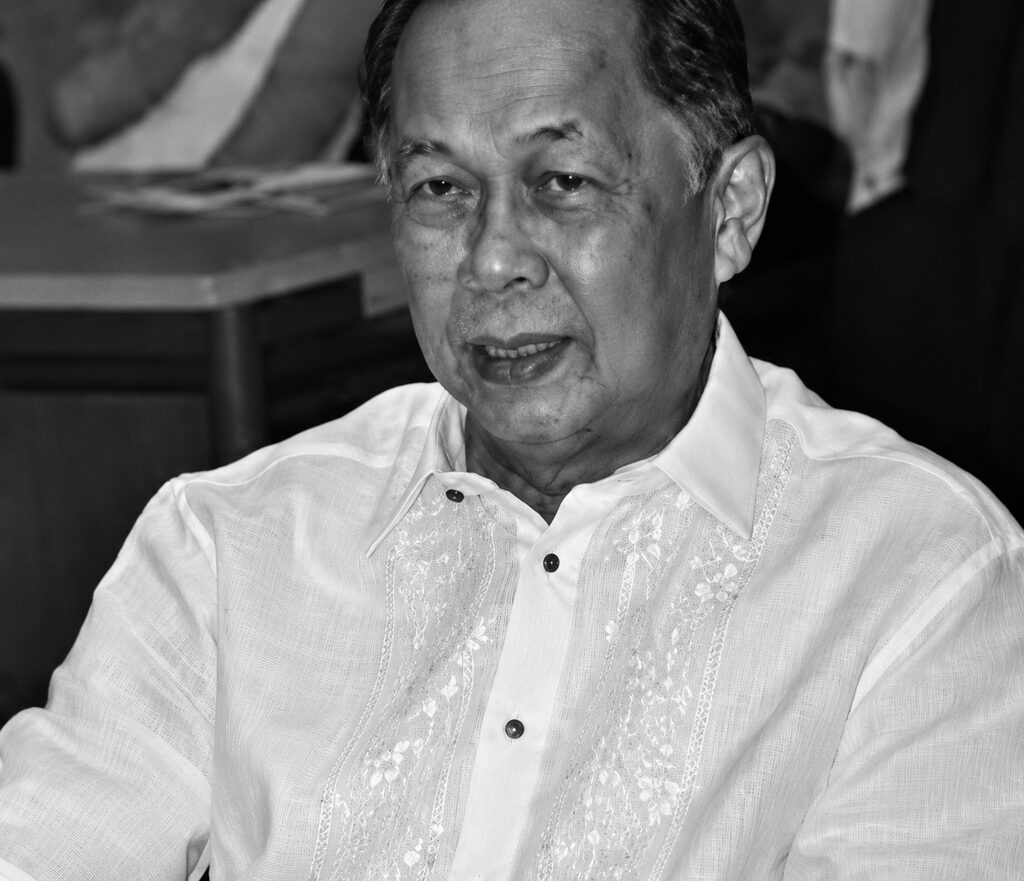
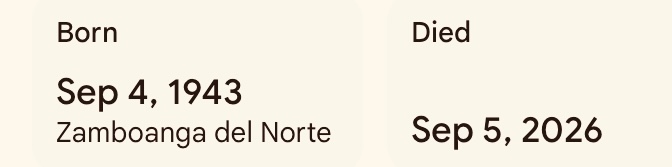
Resil B. Mojares, 83, National Artist for Literature. Historian, critic of Philippine literature; book author, professor, and former newspaper columnist.
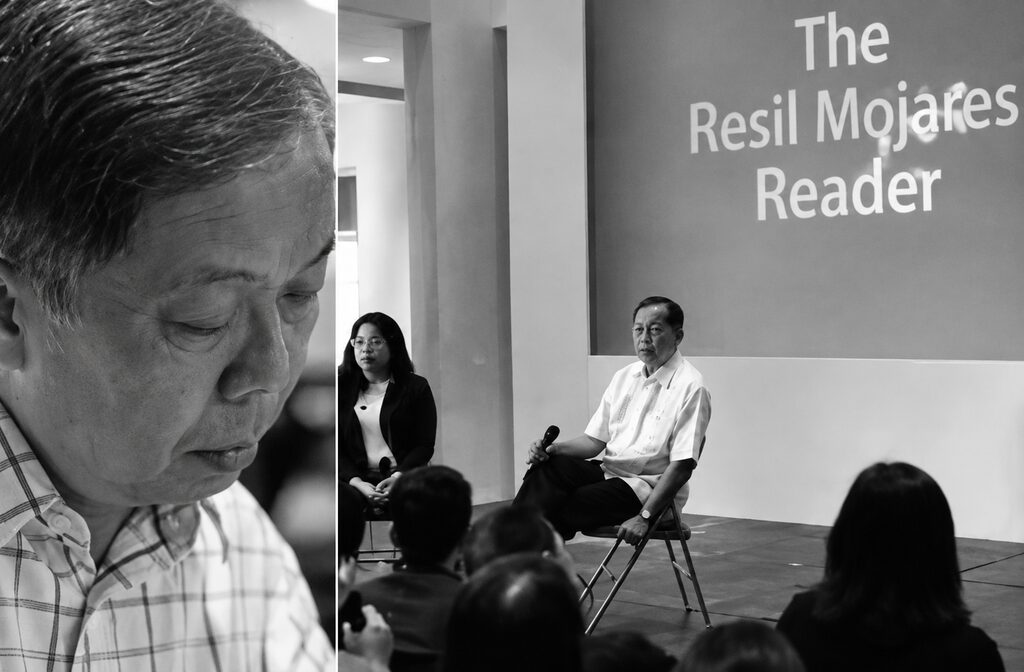
Tribute from two journalists
1. The wall clock: Resil explains the news lead.
NINI B. CABAERO
talks of RBM’s journalism, including a short stint in publishing a local newspaper.
First published in FB post, Sept. 12, 2026.
Dr. Resil Mojares was a chronicler of local media history. He believed in the importance of provincial newspapers as witnesses to the community’s transformation.
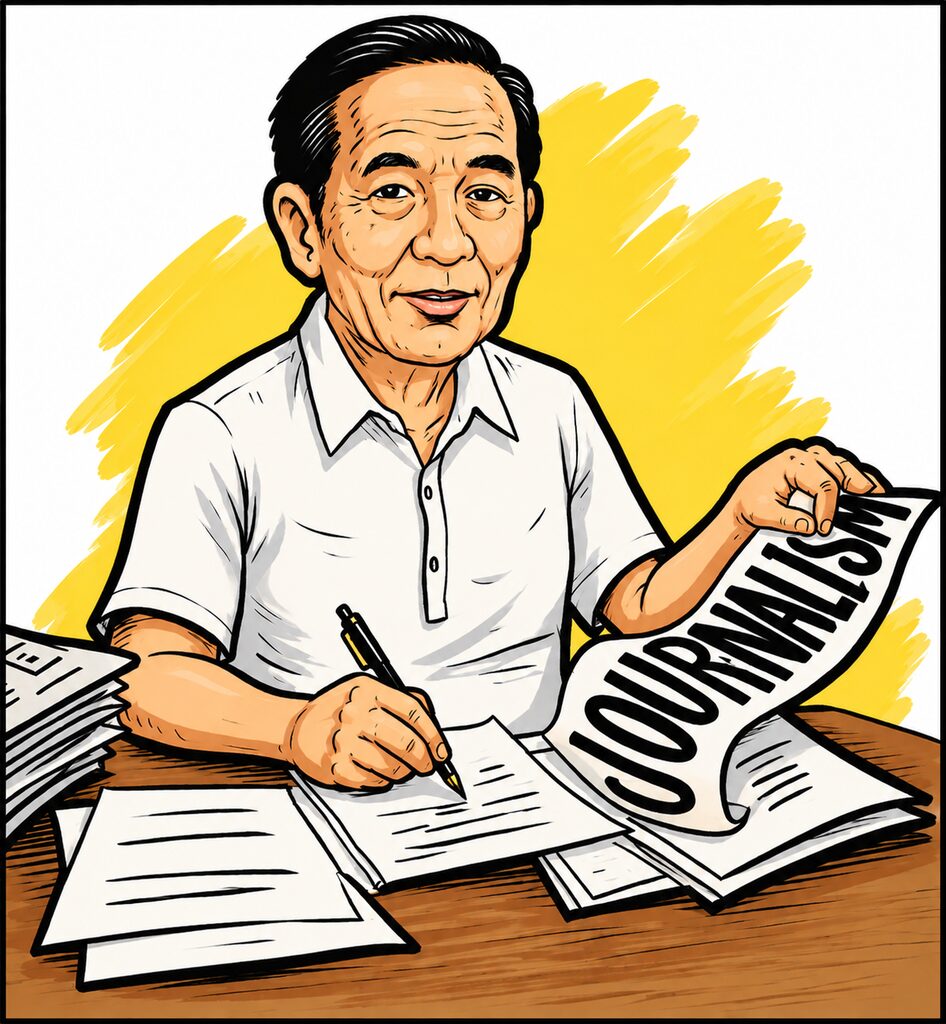
He was a journalism practitioner as a newspaper columnist, a director of a grassroots media initiative and a publisher and board chairman of a cooperative newspaper owned by journalists and the community. He joined us in media adventures and dreamed with us foolish journalists.
His columns for The Freeman titled “Sticks and Stones,” critical of local politics and the Marcos administration (the first President Marcos) caught the attention of powerful people. He was arrested on Sept. 23, 1972, when martial law was declared. He was eventually released but was prohibited from leaving Cebu for years.
He later moved to SunStar as a columnist for SunStar Weekend, the Sunday magazine. I faithfully followed him and his fellow columnist, Judge Simeon “Jun” Dumdum. I was a fan of both of them. I still am.
I remember clipping their columns and placing them in an album. Unlike now, when you screenshot an article or download a page and save it as a PDF, it was with scissors and paste for me.
Every Sunday, I would wait for his column, “Footnotes to an Absent Text,” and consume his thoughts in an unhurried, even prayerful, way.
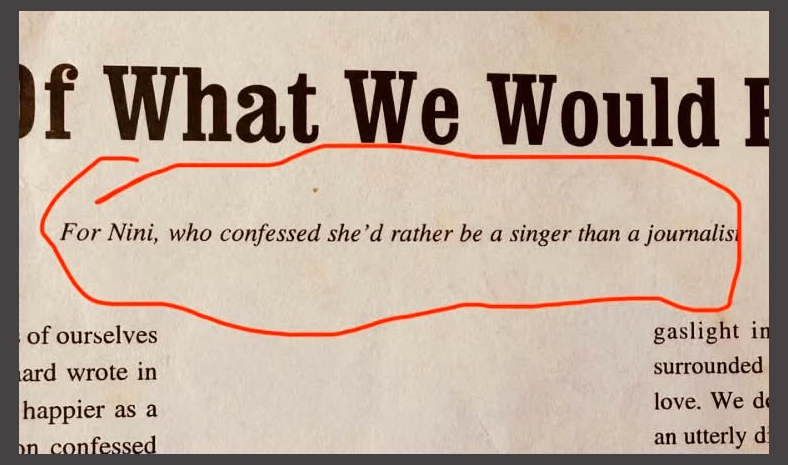
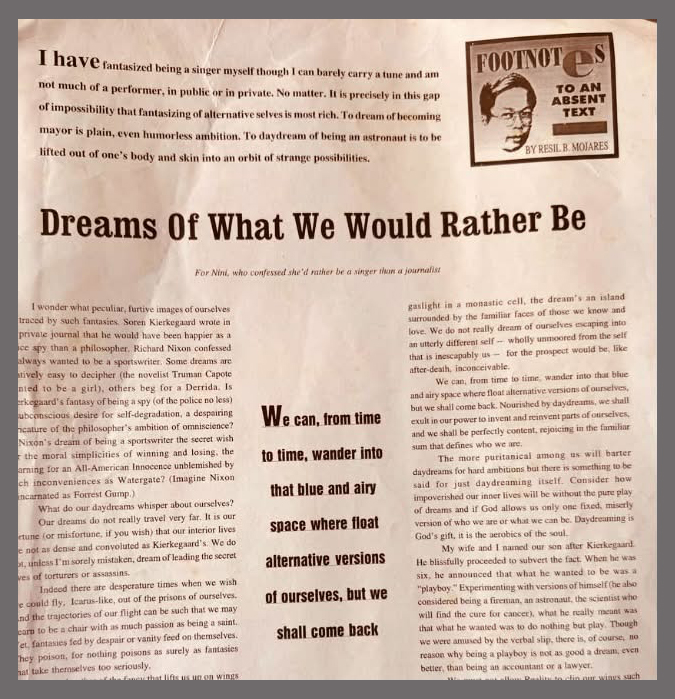
The column “Footnotes to an Absent Text” in SunStar Weekend that Resil Mojares dedicated to Nini Cabaero. The magazine was then SunStar Cebu’s weekly supplement. Another set of columns he had earlier written for The Freeman sounded combative: “Sticks and Stones.”
That reminds me of what Judge Dumdum said during the tribute organized by the Women in Literary Arts-Cebu last Wednesday. On the day before he died, Resil visited two bookstores, he said. Fully Booked and Booksale. He added, and I’m paraphrasing here, that Resil often went to bookstores because, perhaps, he was searching for the Word. The Word of God.
After hearing this, I recalled my second-to-the-last encounter with Dr. Resil. It was during a Big Bad Wolf Book Sale in Cebu in one of the malls here, SM Seaside, I think. I was so happy to see him. He already had a stack of books under his arms.
I told him I would stalk him and pick whatever he picked. I just didn’t want to be overwhelmed by the enormity of rows and rows of books of all kinds. So I shadowed him.
He saw me. Didn’t smile. Still, I followed him while keeping my distance. He continued to ignore me. In fact, he looked very serious as he went through the books. He looked solemn, even prayerful.
Then I thought: This place must be like a church to him. He wasn’t to be disturbed. It was then that I decided to leave him in his church.

While writing for SunStar, Dr. Resil became part of the Barefoot Media Initiative (BMI), a grassroots initiative aimed at empowering ordinary citizens or NGO workers to be barefoot journalists. Before crowdsourcing or content creators became part of our vocabulary, we were already working at building community-based reporting without the formal institutional setups.
In one BMI training, I remember a lesson Resil gave participants. He talked about the lead paragraph in a news report. The lead is usually the first paragraph, sometimes the first two or three paragraphs, of a news article. It’s supposed to contain the most important part of the story and answer the 5Ws and 1H — who, what, when where, why and how. But deciding what is most important may differ depending on whether you are a journalist, a social worker, or an NGO writer.
In his talk, he pointed to the clock in the room. He said we wouldn’t have noticed the clock until he pointed it out to us. That, he said, is the purpose of the lead.
You bring attention to what otherwise could be ignored, probably because it wasn’t the most obvious, the most striking, or what people immediately considered the most important. The lead paragraph could point us to what others may be blind to.
I had four years of journalism education and the lead was never explained to me in such a way. It took a Dr. Resil to put it plainly, simply, differently.
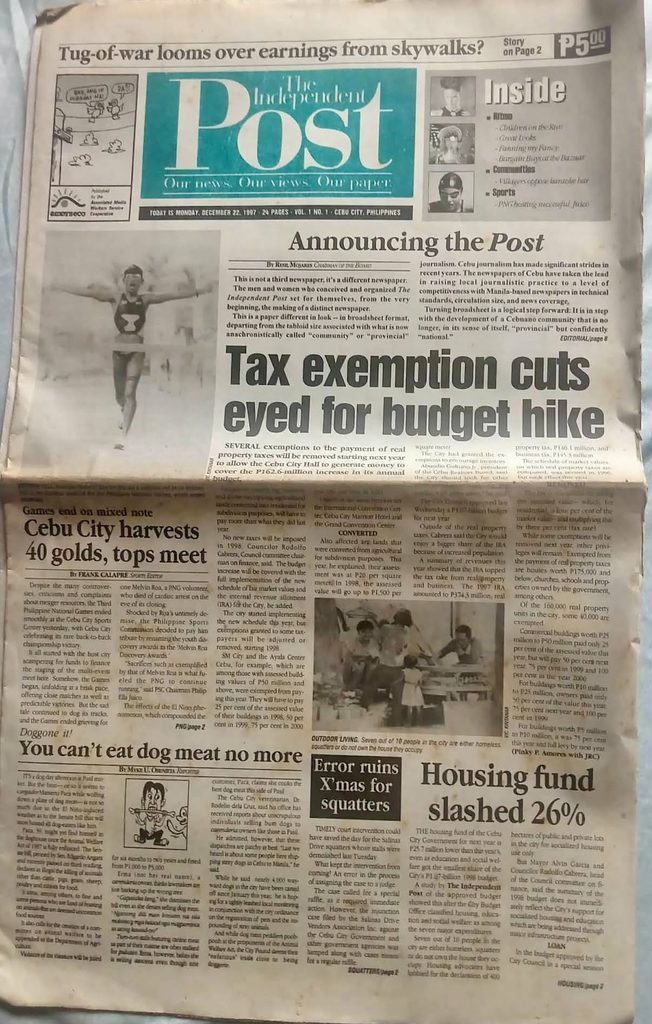
Page 1 of The Independent Post inaugural issue. Resil Mojares was its publisher.
After Barefoot Media, our journey brought us to The Independent Post, the only cooperative newspaper in Cebu. It was a daily broadsheet. Short-lived.
In his first editorial, published on page 1 of our inaugural edition on Dec. 22, 1997, he wrote: “This is not a third newspaper; it’s a different newspaper. The men and women who conceived and organized The Independent Post set for themselves, from the very beginning, the making of a distinct newspaper.”
Resil was chairman of the board, later publisher. I was news editor later editor-in-chief, when unpaid salaries led to members leaving and, eventually, massive resignations. It was a difficult and most challenging time for those involved. Because we went without salaries for months, some lost their homes, or had to pay the debts of the cooperative for several years afterward.
But we believed in what we were doing.
Imagine journalists, artists, printing-press workers, Cebu businesses and individuals who believed in a truly independent media becoming co-owners of a daily broadsheet newspaper, with journalists and the community deciding what was news.
It was, and still is, the ideal setup, I think.
While our cooperative media adventure floundered, Resil was with us all the way. He knew our pains. He helped out financially and in many other ways.
Even after the newspaper shut down, a small group of us continued. This time, we formed the Cooperative for Journalists, or C4J. Resil was still part of that. He contributed financially to help start the group.
C4J went on for a while, conducting online journalism trainings, but it eventually ended when members realized they needed to go back to regular, salaried work.
We kept in touch with Dr. Resil after that. Informally, though. But he was always ready to meet with us, to eat and drink at their house, with always-yummy food prepared by Ma’am Sally.
Resil dedicated one of his SunStar Weekend columns to me. The title was “Dreams of what we would rather be.” I have always felt very privileged by that.
He wrote: “For Nini, who confessed she’d rather be a singer than a journalist.”
It was in the Jan. 7, 1996 issue of the Weekend magazine. Let me quote from it:
“We can, from time to time, wander into that blue and airy space where float alternative versions of ourselves, but we shall come back. Nourished by daydreams, we shall exult in our power to invent and reinvent parts of ourselves, and we shall be perfectly content, rejoicing in the familiar sum that defines who we are.”
Resil, I have come back, many times.
Thank you.
But yeah, I still try to hit a note. 
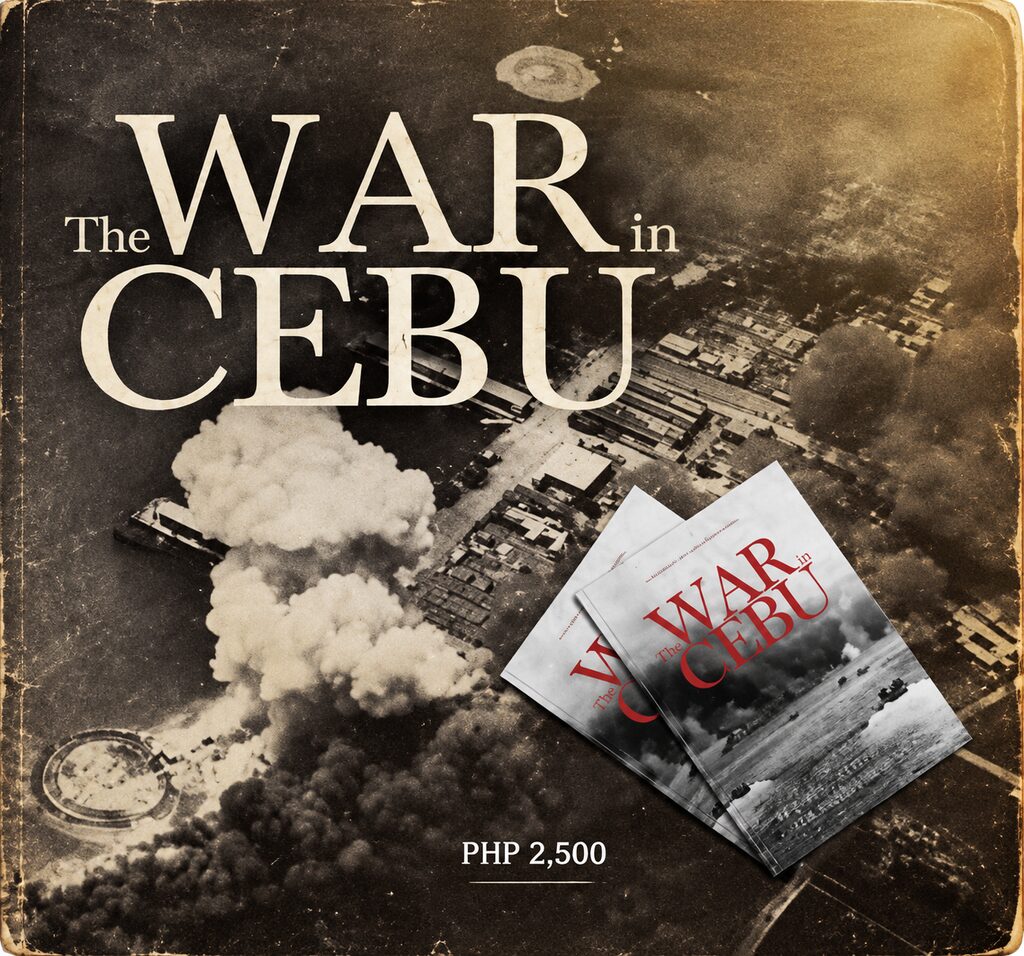
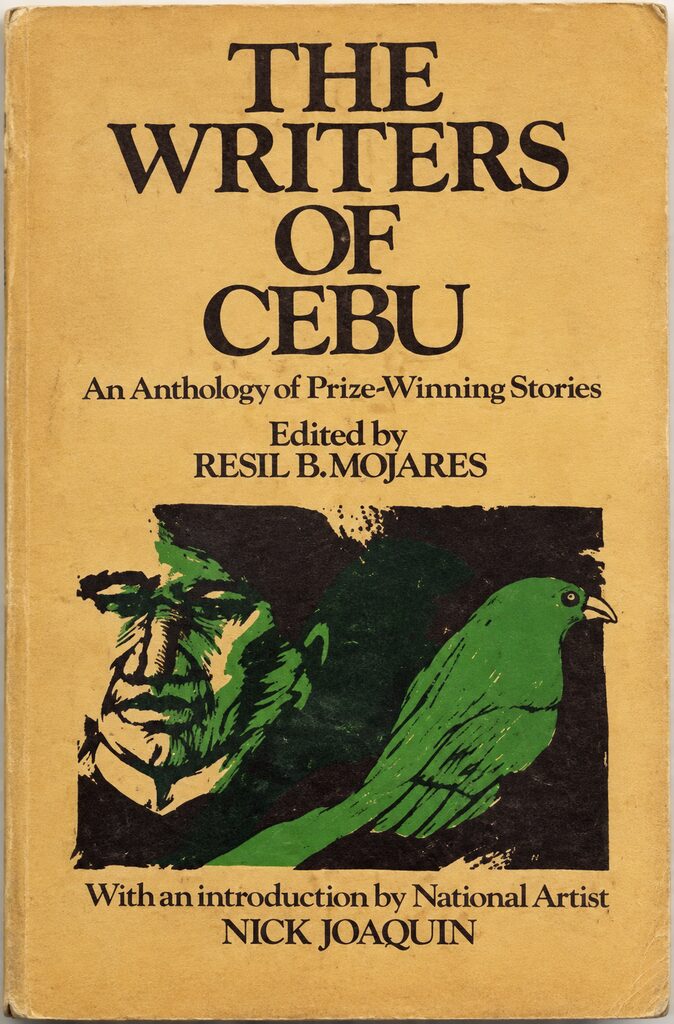
Two of the several books Resil B. Mojares wrote or edited.
2. Do you know how streets come to be? Resil told us. On writing: Keep your prose ‘light academic’
JASON A. BAGUIA
in his “memories” of the historian-teacher.
First published Sept. 13, 2026, in CDN Digital.
CEBU CITY, Philippines — One afternoon sometime in the 2010s, Professor Emeritus Resil Mojares, national artist for literature, gave a lecture about Colon Street at the Palm Grass Heritage Hotel along Junquera Street in Cebu City.
There was a small audience including Prof. Jay Nathan Jore of the University of the Philippines Cebu Fine Arts program, and the gathering may have coincided with one of those times when people, seemingly for no reason, debate whether Colon is indeed the oldest street in the Philippines.
I was not taking notes, so I do not remember many things from that afternoon. But I trust that Dr. Mojares would forgive me for forgetting details, without a doubt thoroughly researched, of his presentation. I am sure that he, of all people, knows how remembering sometimes is a wrestle, sometimes a dance.
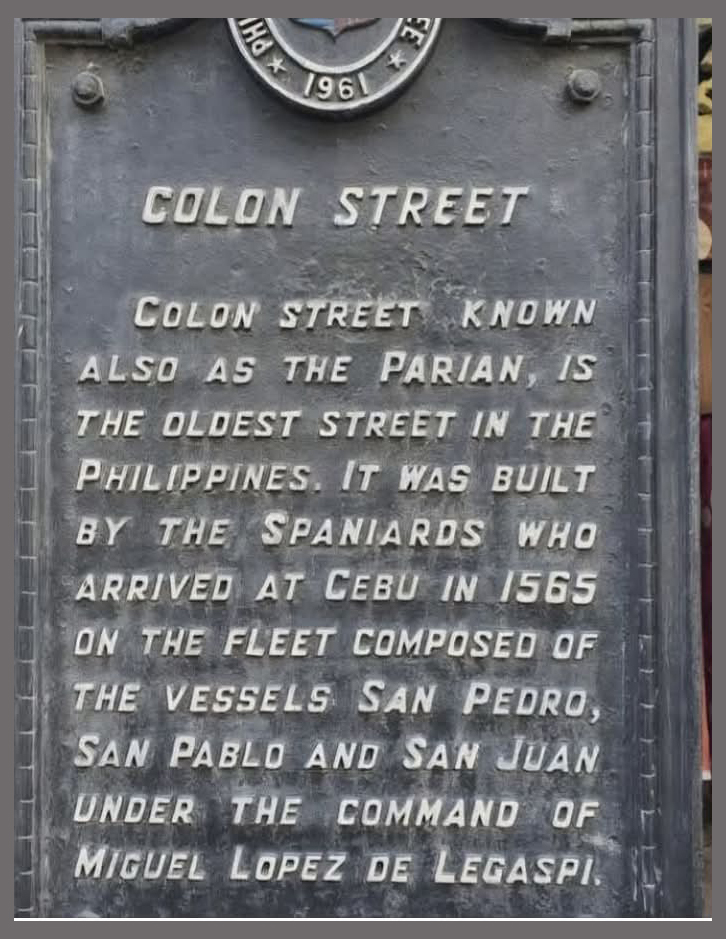
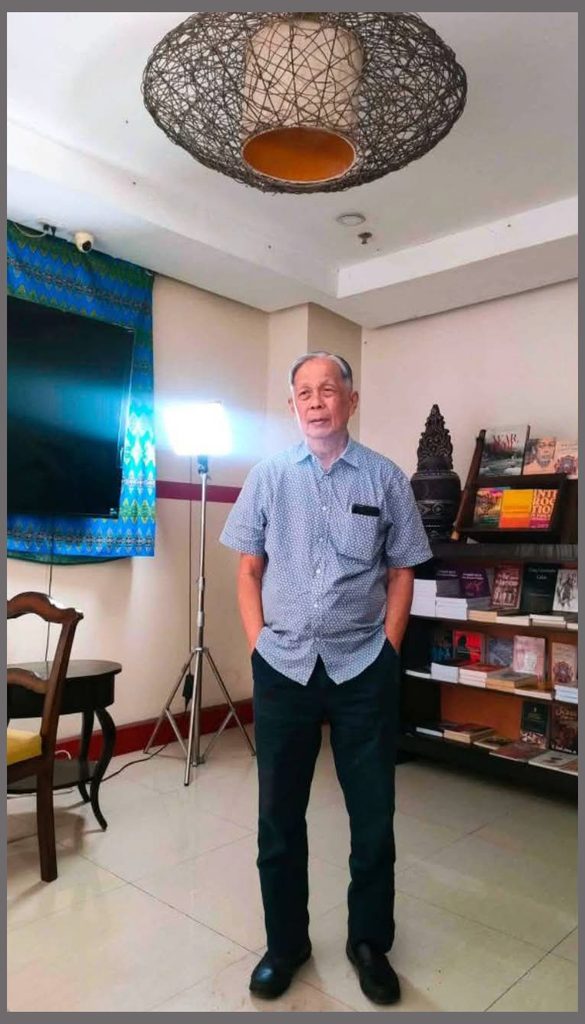
Colon Street was the topic of two conversations with Palm Grass Cebu Heritage Hotel: the first in 2010. Photo is during his 2026 talk.
Related: Colon Street: is it really the “oldest street” in the Philippines?
Anyhow, I do remember how the eminent man of the arts and letters pointed out that what we know today as Colon Street did not stretch as lengthily as it does from Mabini Street in the north all the way to its terminus in the south where Leon Kilat, Borromeo, and C. Padilla Streets intersect. Colon, centuries ago, would have stretched just long enough to parallel one of the blocks that stand by its longer iteration today.
Great man, little way
Dr. Mojares also shared his hypothesis of how streets in general come to be. And now that I am recalling him together with the rest of a nation who with his passing is bereaved of a father, for a nation’s father he is, having revealed to us in his work more of who we are, I realize that he devised a quite Filipino explanation for the origins of streets: A street, he said, is born when a group of people frequent a strip of earth, recognizing that it most easily conveys them from one point of the terrain to another.
That inference leads many of us to the Ceb-lish (Cebuano plus English) or Bis-lish (Bisaya plus English) concept “syortkatanan,” descriptive of the alley or road, pedestrian or government-sanctioned, which we walk on to take a shortcut to wherever.
I dare say that Colon, assuming that it was but a short passageway within the longer, 21st-century thoroughfare, constitutes one metaphor for who Dr. Mojares has come to be in the Cebuano, Bisaya, Philippine, and global imagination. Having built out of his sources, gifts, and grit with neither fanfare nor self-promotion, he and his works are akin to a little way that many have found they too are a part of, so that culture, history, and literature are no longer just objects of study considered according to the traditions of Western academia but also cartographies of knowledge with Philippine features, the vastness of which still awaits rediscovery and reappraisal.
Since the monstrous traffic that besieges Cebu was very much already a problem back then, and the history of streets would be incomplete with nary a mention of the experience of the man on the street, I tried in the open forum to coax Dr. Mojares into the discussion on the search for a solution to the urban horror. It was with the scholar’s humility that he initially declined to give an answer, certain that he had none, but also with scholarly openness to interdisciplinarity, calibrated with a caring tentativeness, that he, after I rephrased my question, indicated that planners must begin the search for an answer with a clear grasp of a street’s carrying capacity in relation to the number of vehicles that frequent a given district.
Light academic
While I experienced Dr. Mojares as the humble professor that afternoon, I was to encounter him as the firm leader a few years later. Joining fellow authors at dawn in Portugal (early evening local time) in a Zoom meeting about the book “More Cebuano Than We Admit: Aspects of Cebuano History, Culture, and Society” that he co-edited with Prof. Dr. Hope Sabanpan-Yu, he assigned me to write an article about the relationship between the Santo Niño de Cebu, the central Christological devotion among Cebuanos and the Nuestro Padre Jesus Nazareno devotion to whom Manileños are famous for.
That portion of the book’s chapter on faith (others were to be written by Melva Rodriguez Java and Dr. Clodoveo Nacorda), would not have seen print had it not been for Dr. Mojares’ vision. I had come to the meeting with a proposal to write about the globalization of the devotion to the Santo Niño. Dr. Mojares, however, gently emphasized that the globality of popular piety toward the Holy Child had already been written about.
It was at that meeting that Dr. Mojares himself distilled the secret of his writing style. He only had one instruction for around 15 authors and it was for us to keep our prose “light academic.” Writing my essay in the Romantic heartland of Europe where devotions to the Christ-child and Christ carrying the Cross originated was a long moment of contemplation. I finished writing my piece and mailed it to Dr. Sabanpan-Yu from aboard an Italian train bound for Rome, which in presiding in charity is ultimately responsible for all the world’s devotions. There was poetic justice to the moment.
But the view of the whole canvas belonged to the book’s co-editors, especially Dr. Mojares, who previously authored “The Feast of the Santo Niño: An Introduction to the History of a Cebuano Devotion,” now mandatory reading for anyone who would wish to write anything about Cebu’s Holy Child. As if history nodded to Dr. Mojares, the Philippines — with the Vatican’s approval — celebrated for the first time in 2025 as part of its national liturgical calendar the annual Feast of Nuestro Padre Jesus Nazareno. That year, the date of the Nazareno feast, January 9, fell on the first day of the novena in preparation for the Solemnity of Santo Niño de Cebu.